The best finds rarely announce themselves. They sit on a trestle table in a village hall at half past eight in the morning, or on the back shelf of a charity shop in a town you only stopped in because the A-road was closed. Britain is unusually well supplied with ways to buy old things, and much of the pleasure lies in the hunting.
What follows is a guide to three of them: fairs, the charity-shop trade and the small regional auction houses most buyers never think to check — along with the practical business of premiums, viewing days and getting a chest of drawers home without wrecking it.
None of it requires a specialist's budget. It requires patience, a tape measure and the willingness to walk away.
Fairs: Where the Eye Learns Fast
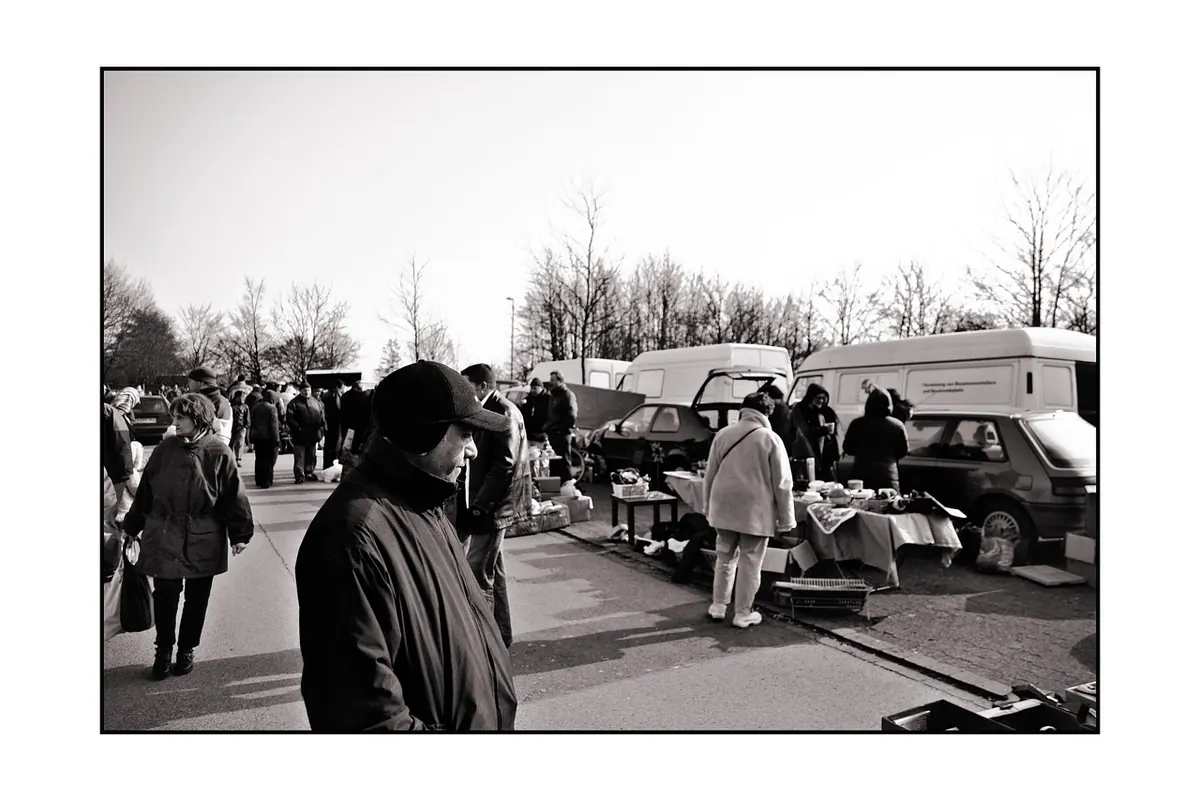
A good fair compresses a week of shop-cruising into a morning. The long-running events at Newark, Shepton Mallet and Ardingly draw dealers from across the country, and the range is the point: Georgian glass, a 1930s cigarette card album and a set of brass weights within ten yards of one another.
Early Birds and Late Bargainers
Timing matters. Early on the first day is when the trade buys, torches and cotton gloves to hand, and the best stock goes within the first hour. Late on the final day, prices soften because nobody wants to load the van again. Both are enjoyable; they are different sports. If you want to learn rather than buy, go early and listen to the haggling. If you want a bargain on something that has already been passed over forty times, go late and make an offer.
Most stalls now take cards, but carry some cash as a backup. Ask questions, too. Dealers are usually happy to explain how they date a piece, and that conversation is worth more than the object on the table.
Every stallholder is running a small museum with a price list attached. Ask why something is the age they say it is, and you will usually get a better answer than any book gives you.
What to Take to a Fair
- Cash in small notes, with a card as backup.
- A tape measure, because the alcove at home is never the size you remember.
- A torch — chipboard halls are dark, and raking light reveals hairline cracks in glass and porcelain.
- A notebook and pencil for prices, stall numbers and a dealer's card.
- Loose layers and comfortable shoes; you will be on your feet for hours and the halls are either freezing or stifling.
- Newspaper and bubble wrap in the boot, so nothing has to travel loose on the way home.
One etiquette note: do not crowd a stall when someone is mid-negotiation, and do not start inspecting a piece the dealer has just sold. Both are remembered.
The Charity Shop Circuit
The charity shop is the least glamorous of the three and, occasionally, the most profitable. The stock is donated, the pricing is done by volunteers, and the gap between what something is and what it is assumed to be is where finds hide.
Geography does a lot of the work. Shops in prosperous market towns receive better donations than those on busy high streets, and shops near house-clearance routes — retirement towns, cathedral cities, anywhere with a great many bungalows — see more mid-century furniture and better ceramics. The British Heart Foundation and several hospice chains run dedicated furniture shops. These are worth a detour, because a walnut sideboard that would be £400 in a curated vintage shop is often £45 and, quite literally, in the way.
A few realities. Anything obviously valuable is now checked online by staff before it reaches the rail, so the true "sleeper" is rarer than it was. Books are the great exception: most branches price by size and condition, and modest first editions still slip through at £2. Go on weekday mornings after a weekend of donations, and go often — good stock turns over in days, not weeks.
Provincial Auction Houses: The Underrated Middle Ground
Between the charity shop and the specialist dealer sits the small auction house: a two-room operation on an industrial estate that sells house clearances, farm dispersal lots and the contents of three semis on a Tuesday morning. It is where a good deal of the trade buys, which tells you something.
The economics are straightforward and slightly brutal. The hammer price is not the price. Expect a buyer's premium of roughly 20 to 25 per cent, plus VAT on that premium, plus an online bidding surcharge of 3 to 6 per cent if you bid through a platform. A £100 hammer can easily become £135 before you have carried it to the car.
The hammer price is a rumour. The invoice is the truth.
Reading a Catalogue Properly
Catalogue language is precise once you know the code. Attributed to means someone hopes. In the manner of means it is not by them. After means a copy — possibly a very old copy, but a copy. And "with faults" can mean a hairline crack or a missing leg, so the phrase tells you almost nothing. Ask.
Estimates are a marketing device rather than a valuation. Low estimates attract bidders; the reserve is what matters, and it is usually set near the lower end of the guide.
Viewing Day Rules
- Go in person if you possibly can. Two hours with a torch beats any photograph.
- Request a condition report by email, especially for anything you intend to bid on unseen.
- Handle the piece: lift it, turn it over, look at the underside, the joints and the back. Restoration hides underneath.
- Set a maximum before the sale starts and write it in the margin of the catalogue.
- Register, collect your paddle, and check the collection window — most houses allow two days, not two weeks.
Getting It Home Without Wrecking It
Most damage happens in the last mile. A handful of habits prevents nearly all of it.
Dismantle where you can. Take the drawers out of a chest and carry them separately; they are lighter, and the carcass is far less likely to rack. Never lift a table by its top, and never strap anything tight across a veneered surface — the straps mark, and old veneer lifts with the slightest flex. Stand ceramics and glass upright in the footwell, wedged with blankets, rather than lying loose in the boot. Lay mirrors and frames flat on something soft, never leaning against one another.
For anything larger than a hatchback, the sums usually favour a man with a van, and most auction houses keep a list of regular carriers. For smalls, a packing and courier service is often cheaper than the fuel and the risk.
The Bottom Line
Antiquing in Britain is not really about taste. It is about repetition: seeing enough objects that the wrong ones begin to look wrong. Fairs teach you quickly, because you can compare fifty dealers in a single morning. Charity shops teach you humility and, now and then, arithmetic. Provincial auctions teach you how to bid with your hands in your pockets.
Go often, buy little, and never fall in love with anything before you have looked at the underside.
Photo: Peggy_Marco / Pixabay